
Sök på Folkhälsomyndighetens webbplats
Relaterade sökfrågor: swedres-svarm 2024 svinkoppor vuxna svinkoppor barn
66 träffar på Svinkoppor inom Hela webbplatsen
-
Invasiva infektioner med grupp A streptokocker (iGAS) 2016
Uppdaterad:Infektioner med grupp A streptokocker (GAS, Streptococcus pyogenes) är vanliga och orsakar bland annat halsfluss, svinkoppor (impetigo), rosfeber (erysipelas) och ytliga sårinfektioner. GAS kan också orsaka mer allvarliga invasiva infektioner såsom blodförgiftning (sepsis), allvarliga mjukdelsinfektioner (nekrotiserande fasciit, NF), och syndrom med kraftig toxinpåverkan…
-
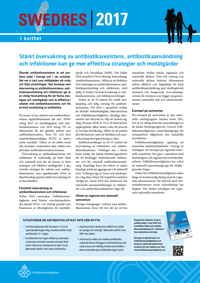
Swedres 2017 – i korthet
Publicerad:Swedres i korthet 2017 sammanfattar försäljningsstatisk över antibiotika och antibiotikaresistens hos bakterier på humansidan.
-
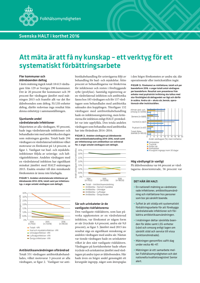
Svenska HALT i korthet 2016
Publicerad:Rapporen presenterar resultat från 2016-års HALT-mätning av vårdrelaterade infektioner och antibiotikaanvändning inom särskilt boende. Årets resultat visar på en sjunkande andel vårdrelaterade infektioner generellt, men att antibiotikaanvändningen är oförändrad.
-
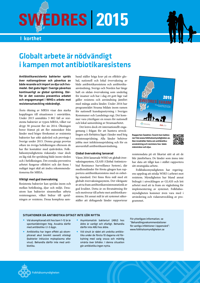
Swedres 2015 – i korthet
Publicerad:Swedres i korthet 2015 sammanfattar försäljningsstatisk över antibiotika och antibiotikaresistens hos bakterier på humansidan.
-
Swedres 2004
Publicerad:The report shows statistics on antibiotic sales and antibiotic resistance in bacteria from both humans and animals.
-
Swedres 2009
Publicerad:The report shows statistics on antibiotic sales and antibiotic resistance in bacteria from both humans and animals.
-
Swedres 2002
Publicerad:The report shows statistics on antibiotic sales and antibiotic resistance in bacteria from both humans and animals.
-
Swedres 2001
Publicerad:The report shows statistics on antibiotic sales and antibiotic resistance in bacteria from both humans and animals.
-
Swedres-Svarm 2015
Publicerad:Swedres-Svarm 2015 shows statistics on antibiotic sales and antibiotic resistance in bacteria from both humans and animals. The report is a co-production between the Public Health Agency of Sweden the National Veterinary Institute (SVA).
-
Swedres 2007
Publicerad:The report shows statistics on antibiotic sales and antibiotic resistance in bacteria from both humans and animals.
-
Invasiva infektioner med betahemolyserande grupp A streptokocker (iGAS) 2022–2023
Uppdaterad:Under 2022 ökade antalet fall av många smittsamma sjukdomar jämfört med 2021, särskilt under hösten och vintern. Ökningen bedöms bero på att kontakterna mellan människor och resandet successivt återgått till nivåer som liknar de före pandemin av covid-19. Sannolikt har även befolkningens immunitet
-
Swedres 2005
Publicerad:The report shows statistics on antibiotic sales and antibiotic resistance in bacteria from both humans and animals.
-
Swedres 2008
Publicerad:The report shows statistics on antibiotic sales and antibiotic resistance in bacteria from both humans and animals.
-
Swedres-Svarm 2013
Publicerad:Swedres-Svarm 2013 shows statistics on antibiotic sales and antibiotic resistance in bacteria from both humans and animals. The report is a co-production between the Public Health Agency of Sweden the National Veterinary Institute (SVA).
-
Swedres-Svarm 2012
Publicerad:Swedres-Svarm 2012 shows statistics on antibiotic sales and antibiotic resistance in bacteria from both humans and animals. The report is a co-production between the Public Health Agency of Sweden the National Veterinary Institute (SVA).
-
Swedres 2011
Publicerad:The report shows statistics on antibiotic sales and antibiotic resistance in bacteria from both humans and animals.